
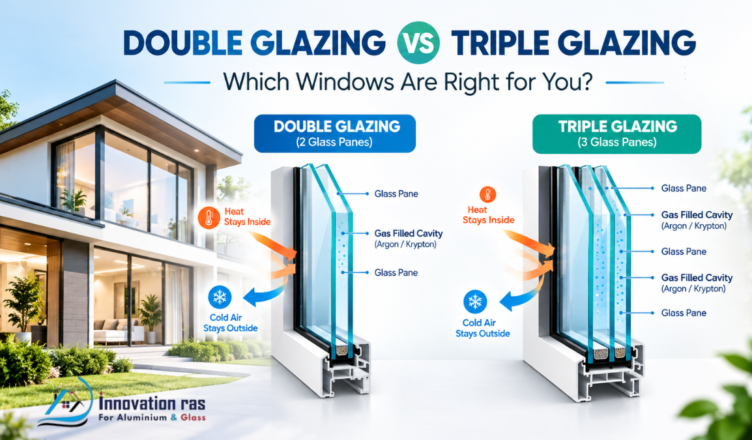
Double glazing vs triple glazing is one of the biggest choices you will face when buying windows. Both options trap heat, reduce noise, and lower energy bills. However, they differ in cost, weight, and performance.
This double-glazing vs triple-glazing guide explains everything in plain English. You do not need any technical knowledge. By the end, you will know which option suits your home, shop, or rental property.
Let’s start with the basics.
What Is Double Glazing? A Simple Explanation
Double glazing means a window with two panes of glass. A sealed gap separates the panes. That gap does most of the work.
Air or gas sits inside the gap. This layer slows heat as it tries to escape. As a result, your room stays warmer in winter and cooler in summer.
Double glazing became standard in many countries over recent decades. Therefore, it is the baseline for most new homes today. Understanding it makes the double glazing vs triple glazing debate much easier.
How a Double Glazed Window Is Built
Every double-glazed unit has a few key parts:
- Two glass panes, usually about 4 mm thick each
- A spacer bar that holds the panes apart
- A sealed cavity, typically 12 to 16 mm wide
- Gas filling, often argon, which insulates better than air
- Low-E coating, a thin invisible layer that reflects heat back into the room
The edges are sealed tightly. This stops moisture from getting in. If the seal fails, the window can fog up between the panes.
Typical Lifespan and Performance
A good double-glazed window lasts 20 to 30 years. Some last longer with proper care.
Modern units perform far better than older ones. For example, a new, efficient unit has a U-value of around 1.2 to 1.6. An older double-glazed unit may sit at 2.8 or higher.
What Is Triple Glazing?
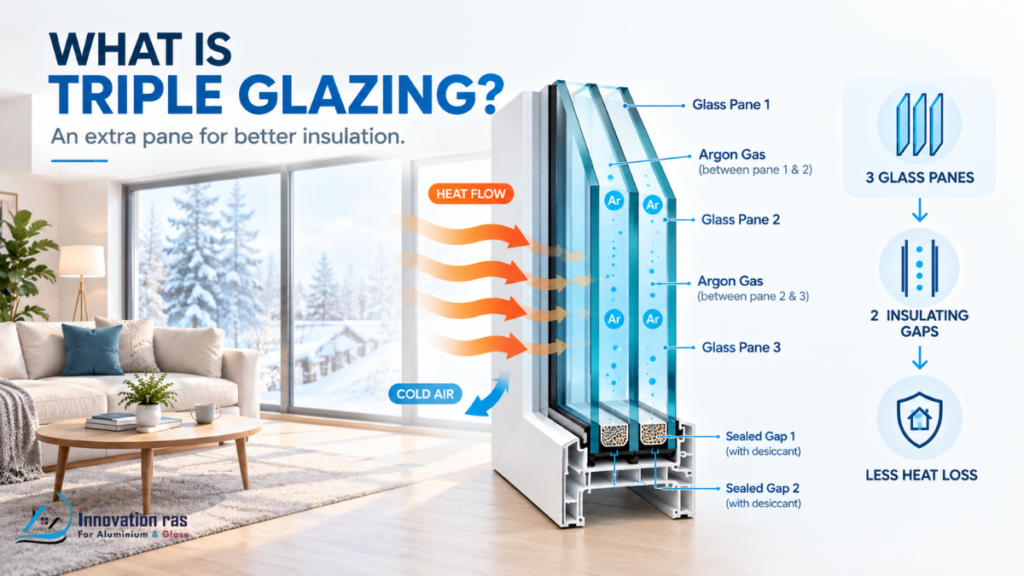
Triple glazing adds a third pane of glass. It also adds a second sealed gap. The window therefore has three panes and two layers of insulating gas.
More layers mean slower heat loss. Consequently, triple glazing is popular in cold countries such as Sweden, Norway, and Canada. It is also common in ultra-efficient “passive house” buildings.
How the Extra Pane Changes Things
The extra pane improves insulation. It also keeps the inner glass surface warmer. That means fewer cold spots near the window.
However, more glass means more cost. Therefore, the price gap is central to any double glazing vs triple glazing comparison.
Why Triple Glazed Units Are Heavier
An extra pane adds a lot of weight. A triple unit can be 40% to 50% heavier than a double unit. For example, a large window may need two people to lift it.
Heavier glass needs stronger frames and hinges. Otherwise, the window may sag over time. Older frames often cannot cope. Thus, you may need new frames and not just new glass.
Double Glazing vs Triple Glazing: Key Differences at a Glance
Here is a quick side-by-side view of the two options.
Comparison List
Double glazing:
- Panes: 2
- Typical U-value: 1.2 to 1.6
- Weight: lighter and easier to fit
- Cost: lower upfront price
- Lifespan: 20 to 30 years
- Best for: mild climates and tight budgets
Triple glazing:
- Panes: 3
- Typical U-value: 0.7 to 1.0
- Weight: 40% to 50% heavier
- Cost: roughly 10% to 30% more
- Lifespan: 20 to 30 years
- Best for: cold climates and high-efficiency homes
Notice that lifespan is similar. Both last for decades. So the real decision comes down to cost, climate, and comfort.
In short, double glazing vs triple glazing is a trade-off. You pay more upfront for better insulation. Whether that pays off depends on your situation.
Insulation and U-Values Explained for Beginners
Insulation is the main reason people look at triple glazing. However, the numbers can look confusing. Let’s simplify them.
What a U-Value Really Means
A U-value measures how fast heat escapes through a window. You do not need to memorize the units.
Just remember this: lower is better. A low U-value means less heat loss.
For example, old single glazing sits around 5.7. Modern double glazing sits around 1.2 to 1.6. Triple glazing can reach 0.7 to 1.0.
How Much Heat Each Option Saves
Moving from single to double glazing makes a huge difference. It cuts heat loss through the window by roughly 70% or more.
Moving from double to triple glazing gives smaller gains. Heat loss through the window drops by perhaps 30% to 40%. Nevertheless, the whole-house saving is modest, because windows are only one part of your home’s heat loss.
Therefore, the double-glazing vs triple-glazing gap is smaller than the single vs double gap. Experts call this diminishing returns. Each extra layer gives you a little less than the last one.
Cost Comparison: Upfront Price vs Long-Term Savings
Money is often the deciding factor. Let’s look at both sides.
Average Price per Window
Prices vary by country, size, and frame material. Still, a general pattern holds:
- Double-glazed window: the standard baseline price
- Triple-glazed window: typically 10% to 30% more
- Frame upgrades: can add extra cost for triple units
For example, if a double-glazed window costs 400, the triple version might cost 440 to 520. Across a whole house, that adds up quickly.
Energy Bill Savings and Payback Period
Triple glazing saves more energy. However, the yearly savings are often small. A typical home may only save a modest amount on heating bills.
Therefore, the payback period can be long. In mild climates, it may exceed 20 years. In very cold regions, it can be much shorter.
In other words, double glazing vs triple glazing is a long-term investment question. If you plan to stay for decades, triple glazing can make sense. If you may move soon, double glazing is usually smarter.
Also consider comfort. Some people value warmer rooms more than pure savings.
Noise Reduction: Which Option Is Quieter?
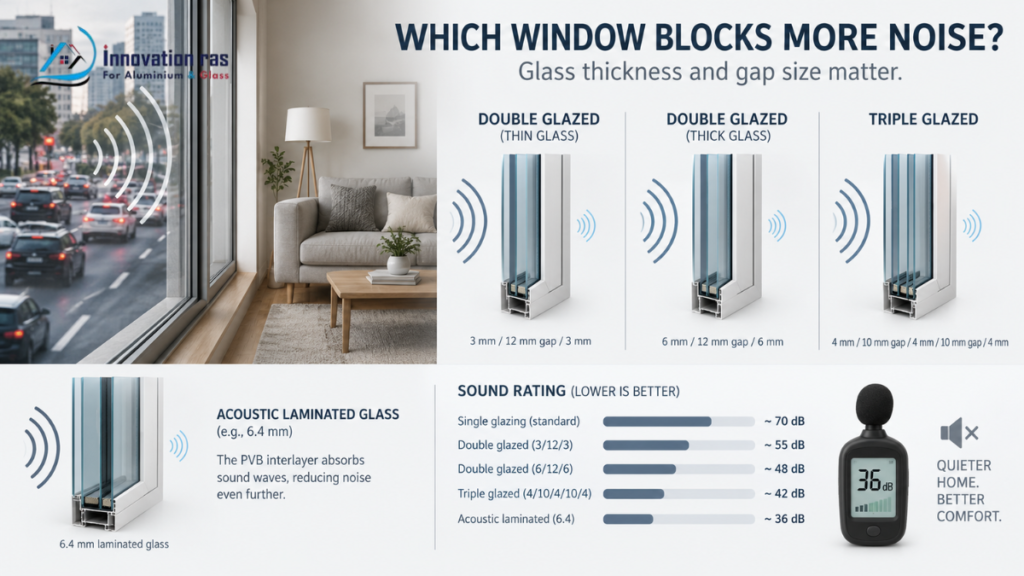
Many people assume triple glazing blocks more noise. However, that is not always true.
Sound insulation depends on glass thickness and gap size. It does not depend on pane count alone. For example, a double unit with thick, mixed-thickness glass can beat a triple unit with thin panes.
Triple glazing can be quieter if built well. However, a standard triple unit may only match a good double unit. Furthermore, narrow gaps can let low-frequency sounds like traffic rumble pass through.
If noise is your main problem, ask for acoustic glass. Laminated glass works especially well. So when comparing double glazing vs triple glazing for noise, check the sound rating (Rw) and not just the pane count.
Condensation, Comfort, and Security
Condensation and Cold Spots
Condensation forms when warm, moist air hits a cold surface. Triple glazing keeps the inner pane warmer. As a result, you see less condensation indoors.
Double glazing still performs well, especially with warm-edge spacers. However, in the double glazing vs triple glazing contest for comfort, triple wins in freezing weather. You can sit near the window without feeling a chill.
Good ventilation matters too. No window can fix a damp room alone.
Break-In Resistance
More glass layers can make a window harder to break. Therefore, triple glazing may offer slightly better security. Nevertheless, locks, frames, and hardware matter more than pane count.
On security, double glazing vs triple glazing is a close call. For better protection, choose laminated glass and multi-point locks. This applies to both options.
Which Is Better for Your Situation?
The best double glazing vs triple glazing choice depends on your needs. Here is a simple guide.
Homeowners in Cold Climates
If winters are harsh, triple glazing is often worth it. You will get warmer rooms and lower bills. Moreover, you may need a smaller heating system.
Busy Roads and Noisy Streets
Choose acoustic glass first. It matters more than the number of panes. For example, laminated double glazing can beat basic triple glazing.
Small Business Owners, Shops, and Offices
Shops lose heat through large glass fronts. Therefore, better insulation can cut running costs. However, large triple panes are very heavy and costly.
For a small shop, double glazing with a low-E coating often gives the best value. Offices on noisy streets may prefer acoustic units. In a double glazing vs triple glazing decision for business, ask for a quote on both.
Renters, Landlords, and Tight Budgets
Landlords usually want low cost and reliability. Therefore, double glazing is typically the practical choice. Tenants still benefit from lower bills at a fair price.
If your budget is tight, spend on good installation first. A well-fitted double unit beats a badly fitted triple unit.
Common Mistakes When Choosing Windows
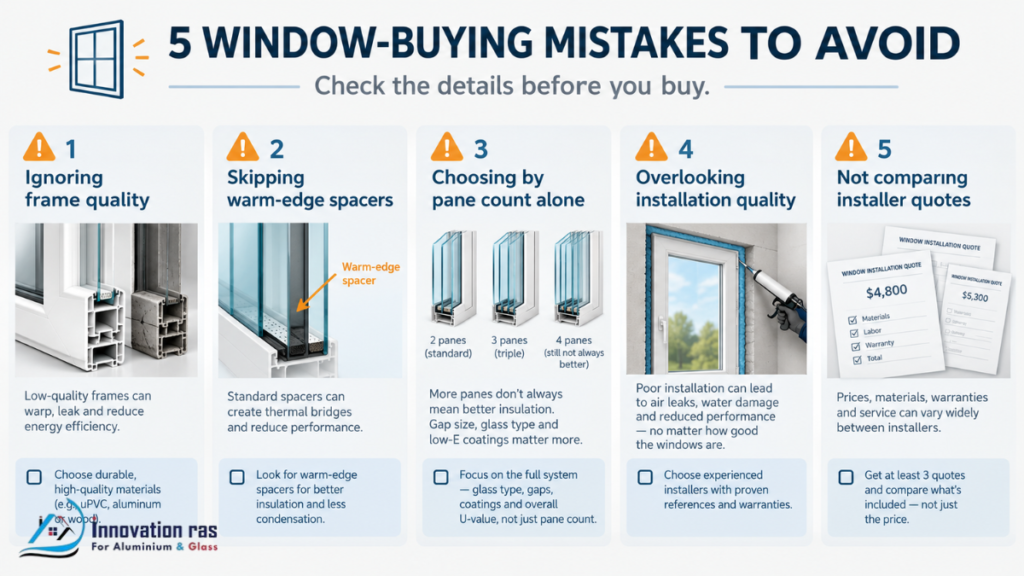
Many buyers make avoidable errors. Watch out for these:
- Ignoring the frame. A poor frame wastes good glass.
- Skipping the warm-edge spacer. It cuts condensation and heat loss.
- Choosing by pane count alone. Check U-values and ratings instead.
- Forgetting installation quality. Gaps around the frame leak heat.
- Not comparing quotes. Prices vary a lot between installers.
Avoiding these mistakes matters as much as the double glazing vs triple glazing choice itself.
Final Verdict on Double Glazing vs Triple Glazing
So, which should you pick? Here is the short answer.
Choose double glazing if you live in a mild climate, have a tight budget, or may move soon. It offers excellent value and solid performance.
Choose triple glazing if you live somewhere very cold, plan to stay long-term, or are building a high-efficiency home.
Ultimately, double glazing vs triple glazing comes down to climate, budget, and how long you will stay. Get quotes for both. Then compare U-values, noise ratings, and installation costs before you decide.
FAQs About Double Glazing vs Triple Glazing
1. Is triple glazing worth the extra money?
It depends on your climate and plans. In cold regions, yes, it often pays off over time. In mild areas, the double-glazing vs triple-glazing cost gap may take over 20 years to recover.
2. Can I upgrade double glazing to triple glazing?
Sometimes. However, the frame must be strong enough for heavier glass. Many older frames cannot take the extra weight, so you may need new frames.
3. Does triple glazing block more noise than double glazing?
Not always. Glass thickness and gap size matter more than pane count. For noise, double glazing vs triple glazing is less important than choosing acoustic or laminated glass.
4. How long do double and triple-glazed windows last?
Both typically last 20 to 30 years. Quality frames, good seals, and proper installation extend that lifespan.
5. Is triple glazing too heavy for older window frames?
Often, yes. Triple units can be 40% to 50% heavier. Therefore, check your frame and hinges before ordering.
6. Do triple-glazed windows add value to a home?
They can. Buyers in cold regions value efficiency and comfort. Even so, the double glazing vs triple glazing difference rarely changes a home’s price by much.
7. How do I know if my double glazing has failed?
Look for fog or moisture between the panes. This means the seal has broken. You may also notice more drafts and higher heating bills.