
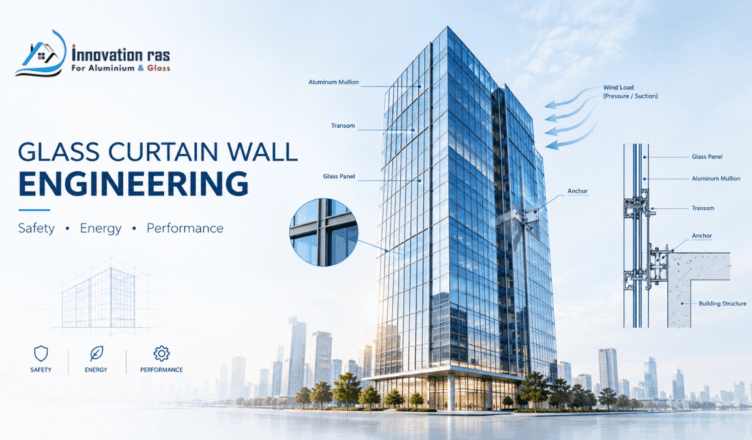
Look at any modern office tower. You will likely see a glass curtain wall covering its front.
It looks sleek and simple. However, a lot of careful engineering hides behind that clear surface.
Poor design can cause leaks, wasted energy, or even falling glass. Therefore, glass curtain wall engineering is important for every building owner.
This guide explains the topic in plain English. You do not need a technical background.
Think of it like building a website from scratch. The design visitors see depends on a hidden structure. A building works the same way.
What Is a Glass Curtain Wall?
A glass curtain wall is a thin outer skin for a building. It is made of glass panels held in aluminum frames.
It hangs from the building like a curtain hangs from a rod. Therefore, it is not part of the structure that holds the building up.
The steel or concrete frame carries the building’s weight. In contrast, the glass curtain wall carries only its own weight. It also resists wind, rain, heat, and noise.
A Simple Analogy for Beginners
Think about building a website from scratch. Visitors see the theme, colors, and layout. However, hosting, security, and code keep everything running behind the scenes.
A glass curtain wall works the same way. The glass is your theme. The engineering is your hosting and code.
If the hidden parts fail, the visible parts fail too. Consequently, good engineering is not optional.
A Quick Look at the History
Glass walls became popular in the 1950s. For example, New York’s Lever House, completed in 1952, is a famous early case.
Early systems had problems with leaks and poor insulation. However, technology has improved a great deal since then.
Today, the glass curtain wall is a global standard for commercial buildings. You will find it in offices, hotels, airports, hospitals, and malls.
Why Glass Curtain Wall Engineering Is Important
Engineering turns a pretty idea into a safe building. Without it, glass walls would fail quickly.
A glass curtain wall faces wind, rain, heat, fire, and movement every single day. Therefore, each of these forces needs its own solution.
Here are the six main reasons this work matters.
1. Safety for People
Glass is heavy, and it can break. Engineers therefore choose the right glass type and thickness for each project.
Here are the most common options:
- Tempered glass: breaks into small, blunt pieces instead of sharp shards.
- Laminated glass: stays in place when cracked, thanks to a plastic layer inside.
- Heat-strengthened glass: resists stress caused by uneven heating.
Furthermore, engineers calculate wind loads. Tall buildings face strong wind pressure every day.
A weak glass curtain wall could crack or even pop out of its frame. Good engineering prevents this.
2. Energy Savings and Comfort
Glass lets in a lot of heat. In summer, that means high cooling bills. In winter, warmth can leak outside.
Engineers solve this with insulated glazing units (IGUs). These are two or three glass layers with air or gas trapped between them.
They also add low-E coatings. These are invisible layers that reflect heat. As a result, a well-designed glass curtain wall can cut energy use noticeably.
For example, engineers track three key numbers:
- U-value: how much heat passes through the glass. Lower is better.
- SHGC (Solar Heat Gain Coefficient): how much sun heat enters the room.
- VLT (Visible Light Transmittance): how much daylight gets inside.
Balancing these numbers keeps rooms bright but not overheated. Therefore, comfort improves for everyone inside.
3. Protection From Weather
Water is the biggest enemy of any glass curtain wall. It finds every tiny gap.
Therefore, engineers design drainage paths inside the frame. Water that sneaks in is guided back outside.
Many systems also use a pressure-equalized design. This balances air pressure inside the frame so rain is not sucked inward.
Moreover, gaskets and sealants block air and moisture. Without them, leaks would appear within months.
4. Fire Protection
Fire can spread through the small gap between a floor and the outer wall. Engineers close this gap with fire-stopping material, usually mineral wool.
Consequently, flames and smoke stay contained for longer. That gives people more time to escape.
This detail is small but life-saving. Building codes in many regions require it.
5. Movement Control
Buildings move all the time. Steel expands in heat. Concrete shrinks slowly over the years. Tall towers sway in the wind.
Earthquakes add even more motion. A glass curtain wall must flex with all of it.
Engineers design special joints and anchors for this purpose. Otherwise, the glass could crack under pressure.
6. Long-Term Money Savings
A poor design costs more later. Leaks damage interiors. Repairs on high walls also need special access equipment.
In contrast, good engineering lowers maintenance costs. It also protects the value of the property.
Thus, a glass curtain wall is an investment, not just decoration. Smart planning pays off for decades.
Main Parts of a Glass Curtain Wall
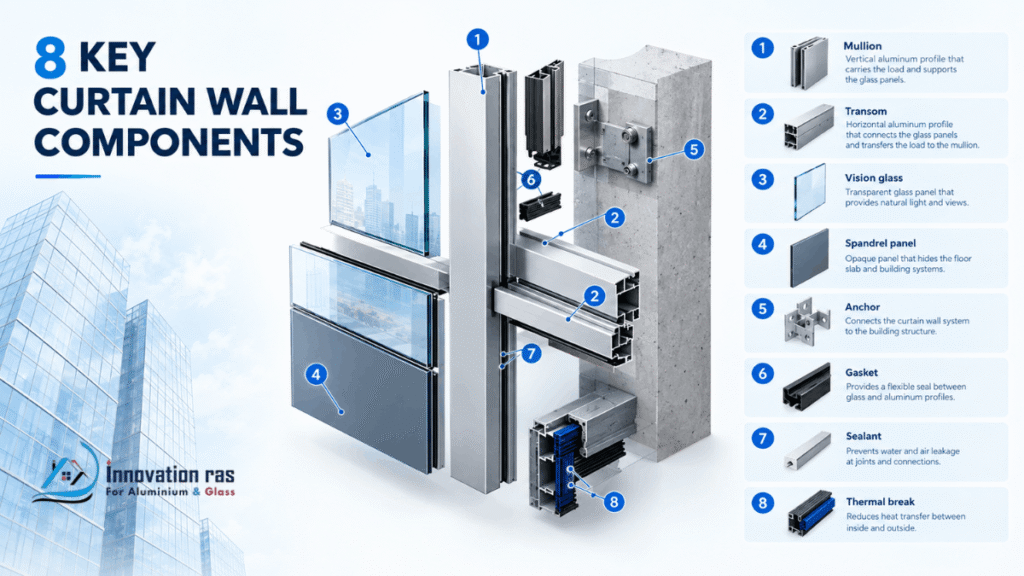
You do not need to memorize engineering terms. However, knowing the basic parts helps you talk to professionals with confidence.
Think of it like learning the menu of a website builder. Once you know the names, the whole process feels less scary.
Here are the key parts of a glass curtain wall:
- Mullions: the vertical aluminum bars that hold the glass in place.
- Transoms: the horizontal bars that sit between the glass panels.
- Vision glass: the clear panels people look through.
- Spandrel panels: opaque glass that hides floor slabs, wiring, and pipes.
- Anchors: metal brackets that attach the wall to the building frame.
- Gaskets and sealants: rubber and silicone that block air and water.
- Thermal breaks: plastic strips inside the aluminum that slow heat flow.
Each part has a specific job. Therefore, a weakness in one part can affect the whole system.
For example, a cracked gasket can let water leak inside. Over time, that leak may damage insulation and interior walls.
Similarly, a poor anchor can shift under wind pressure. As a result, the glass may crack or loosen.
Engineers therefore study how every part works with the others. They do not treat the pieces as separate items.
If one piece fails, the entire glass curtain wall suffers. Good engineering keeps every part working as a team.
Types of Glass Curtain Wall Systems
Not every project needs the same design. Engineers pick a system based on budget, building height, climate, and schedule.
Each type of glass curtain wall has strengths and trade-offs. Therefore, knowing the basics helps you ask better questions.
Stick-Built Systems
In this method, the pieces arrive separately. Workers assemble them on site, one part at a time.
This option is flexible and works well for smaller projects. It also costs less upfront in many cases.
However, it is slower. It also depends on good weather and skilled workers.
Unitized Systems
Here, factories build complete panels, often as tall as one floor. Cranes then lift them into place.
Quality control is better because the work happens indoors. Installation is also much faster.
However, the upfront cost is usually higher. Therefore, unitized systems are common in high-rise towers, where speed and precision matter most.
Structural Glazing
This design uses strong structural silicone to bond the glass to the frame. As a result, no metal caps show on the outside.
The finish is smooth and seamless. Many modern landmarks use this style for that reason.
However, the silicone bond must be designed and installed with great care. Poor bonding can lead to serious failures, so expert engineering is essential.
Point-Fixed (Spider) Systems
In this design, small metal fittings hold the glass at its corners. There are no frames around the panels.
This style is the most transparent of all. For example, you often see it in lobbies, atriums, and hotel entrances.
A point-fixed glass curtain wall creates a dramatic, open feeling. However, the glass must be thicker and stronger because it is supported at only a few points.
Quick Comparison
Here is a simple summary to help you compare the four options:
- Stick-built: lower upfront cost, slower installation, best for small to mid-size projects.
- Unitized: higher cost, fastest installation, best for high-rises.
- Structural glazing: sleek all-glass look, needs expert bonding.
- Point-fixed: maximum transparency, needs thicker glass.
Ultimately, the right choice depends on your goals. A qualified engineer can match the system to your budget, climate, and design.
How Engineers Test a Glass Curtain Wall
Engineers do not simply hope a design works. They prove it with tests.
A failed wall on a finished building is costly and dangerous. Therefore, testing happens early, before the real installation begins.
Think of it like previewing a website on a phone before you launch it. You catch the problems while they are still cheap to fix.
Step 1: Build a Mock-Up
Before installation, a full-size mock-up is often built. It is a sample section of the glass curtain wall, made with the real materials and details.
Labs then test this sample under harsh conditions. The results show whether the design is ready.
Step 2: Run the Key Lab Tests
Common tests include
- Air leakage testing (ASTM E283): measures how much air passes through the wall.
- Water penetration testing (ASTM E331): sprays water at the wall to check for leaks.
- Structural performance testing (ASTM E330): applies pressure that copies strong wind loads.
- Seismic and movement testing: checks how the wall behaves during earthquakes and building sway.
Each test targets a different risk. Together, they give a full picture of how the wall will perform.
Step 3: Check the Work on Site
Testing does not stop at the lab. Field tests confirm that the finished installation matches the mock-up.
For example, inspectors may spray water on installed sections and look for leaks inside. They may also review the sealant and anchor work.
This step matters because workmanship varies. A perfect design can still fail if the installation is poor.
Why This Matters for Owners
These tests find weak points early. Fixing a mock-up is cheap. Fixing a finished building is not.
Therefore, ask your contractor for the test reports before you sign off. A trustworthy team will share them without hesitation.
In short, every reliable glass curtain wall has passed real-world tests before people ever walk inside.
Common Engineering Challenges
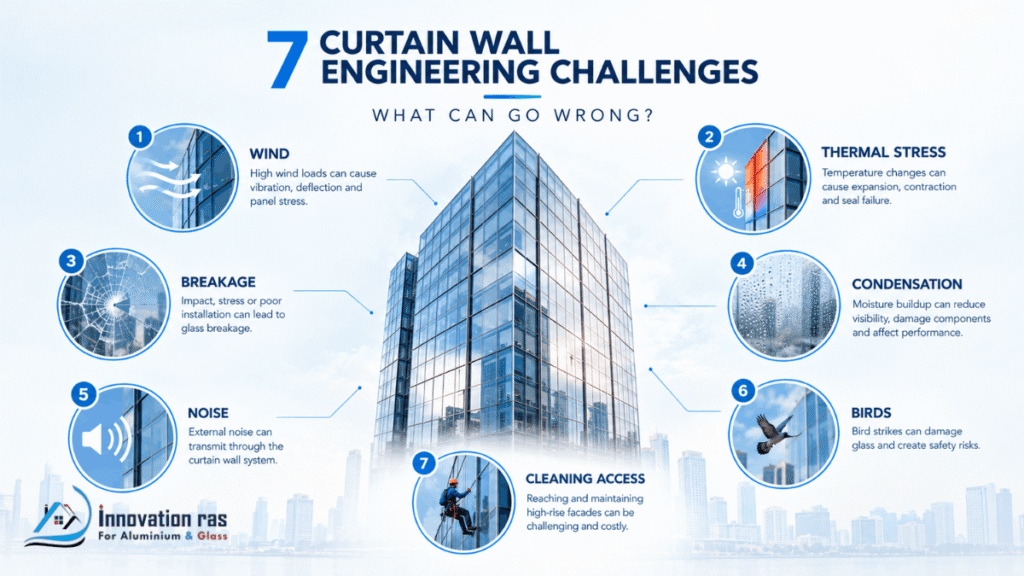
Every glass curtain wall faces tough problems. Fortunately, experienced engineers know how to handle them.
Knowing these challenges helps you understand why the work is complex. Therefore, you can ask smarter questions before a project starts.
Wind Pressure
Tall buildings face strong wind forces. These forces push and pull on every glass panel.
Therefore, engineers use thicker glass and stronger anchors on high floors. They also test the design against local wind data.
Thermal Stress
Glass edges can get very hot or very cold. Meanwhile, the center of the panel may stay at a different temperature.
This uneven heating can cause cracks. As a result, engineers choose heat-strengthened or tempered glass for exposed areas.
Spontaneous Breakage
Tiny impurities called nickel sulfide inclusions can sit inside tempered glass. Over time, they may cause a panel to shatter without warning.
This is rare, but it is serious. Heat-soak testing finds and removes risky panels before installation.
Condensation
Water can form on cold glass or metal surfaces. Over time, this moisture may cause mold or damage.
Thermal breaks and quality insulated glass help prevent it. Good ventilation design also plays a role.
Noise
City buildings sit near traffic, trains, and crowds. Sound easily passes through thin glass.
Laminated glass and multiple layers reduce noise well. Therefore, a well-built glass curtain wall can make a busy office feel calm.
Bird Collisions
Birds cannot see clear glass. As a result, millions of birds are injured by buildings each year.
Patterned or fritted glass makes the surface visible to them. Many cities now encourage or require bird-safe designs.
Cleaning Access
High walls are hard to reach. However, dirty glass hurts both looks and performance.
Engineers plan safe access from the start. For example, they may add roof-mounted platforms or anchor points for cleaners.
Each challenge shows why engineering is important. Small mistakes can become expensive problems.
What Small Business Owners Should Know
You may not own a skyscraper. However, you might plan a shop, office, or showroom with a large glass front.
A storefront glass curtain wall can attract customers. It also fills the space with natural light.
Think of it like your website’s homepage. A strong first impression brings people in. Therefore, quality matters from day one.
Here are some practical tips:
- Ask about energy ratings. Check the U-value and SHGC before you buy.
- Compare lifespan, not only price. Cheap systems often cost more over time.
- Plan for maintenance. Sealants and gaskets need regular checks.
- Check local building codes. Wind, fire, and energy rules differ by region.
- Hire licensed professionals. Certified engineers and installers reduce risk.
Furthermore, always ask for references. Past projects show real quality.
Also, request a written warranty. It should clearly state what is covered and for how long.
Mistakes to Avoid
Many problems start early. Therefore, avoid these common errors when planning a glass curtain wall.
- Choosing the cheapest bid. Low prices often hide poor materials.
- Ignoring the local climate. A design for a mild region may fail in a storm zone.
- Skipping mock-up testing. This saves money at first but risks failure later.
- Neglecting maintenance. Dried sealants let water in.
- Forgetting cleaning access. Dirty glass hurts both looks and performance.
In short, planning must begin on day one. Rushed decisions rarely end well.
For example, a delay in choosing the glass type can push back the whole schedule. Consequently, costs rise quickly.
Future Trends
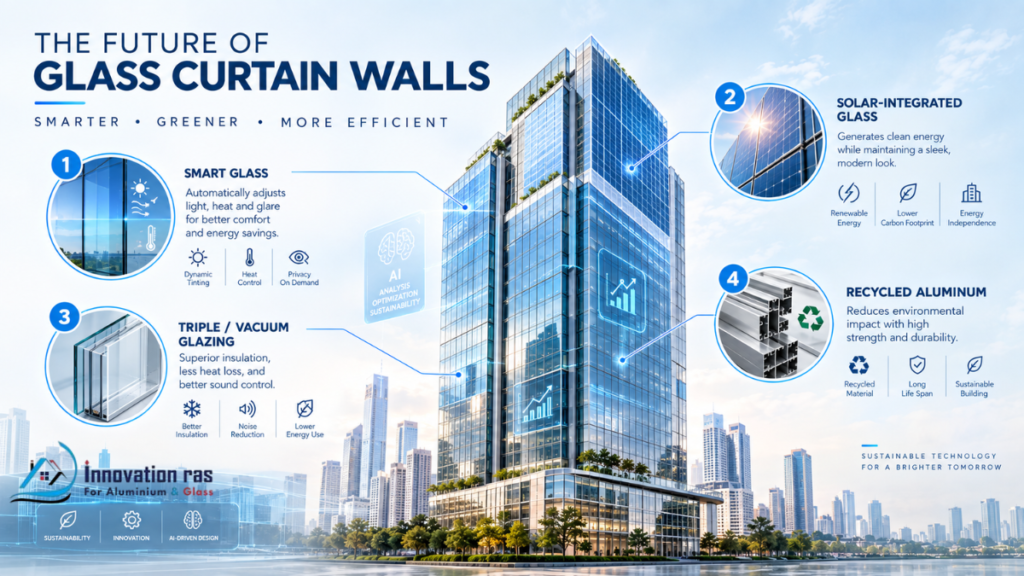
Technology keeps changing this field. Several trends are already growing.
- Smart glass: electrochromic panels change their tint at the touch of a button.
- Solar-integrated glass: panels generate electricity while acting as a wall.
- Triple glazing and vacuum glazing: these give much better insulation.
- Low-carbon materials: recycled aluminum reduces environmental impact.
As a result, the glass curtain wall of tomorrow will do more than look good. It will actively save energy and even produce power.
Moreover, digital design tools now help engineers test ideas before building. Therefore, future projects should be safer and more accurate.
Conclusion
A glass curtain wall may look like a simple sheet of glass. In reality, it is a carefully engineered system.
It protects people from falling glass, fire, and bad weather. It also saves energy and lowers long-term costs.
Therefore, glass curtain wall engineering is important for safety, comfort, and value. Every strong design starts with smart planning.
Whether you manage a large project or a small storefront, remember one thing. Hire qualified experts, insist on testing, and invest in quality. A well-built glass curtain wall will reward you for decades.
FAQs
What is a glass curtain wall?
A glass curtain wall is a non-structural outer wall made of glass and metal frames. It hangs from the building frame and protects the interior from weather.
Is a glass curtain wall structural?
No. It carries only its own weight and outside forces like wind. The main building frame supports everything else.
How long does a glass curtain wall last?
With good maintenance, many systems last several decades. However, sealants and gaskets may need replacing sooner.
Is a glass curtain wall energy efficient?
It can be. Insulated glass, low-E coatings, and thermal breaks improve performance greatly. However, poor design can waste energy.
How much does a glass curtain wall cost?
Costs vary widely. Height, glass type, system type, and location all matter. Generally, it costs more upfront than many traditional walls, so request several detailed quotes.
Can a glass curtain wall survive hurricanes?
Yes, if it is designed for it. Impact-rated glass and stronger anchors are used in storm-prone areas.
Do I really need an engineer?
Yes. Wind, water, fire, and movement calculations require professional expertise. Skipping this step puts people and money at risk.